Frozen shoulder treatment at home: a physiotherapist's guide for Kashmir winters
By Kashmir Health Collective
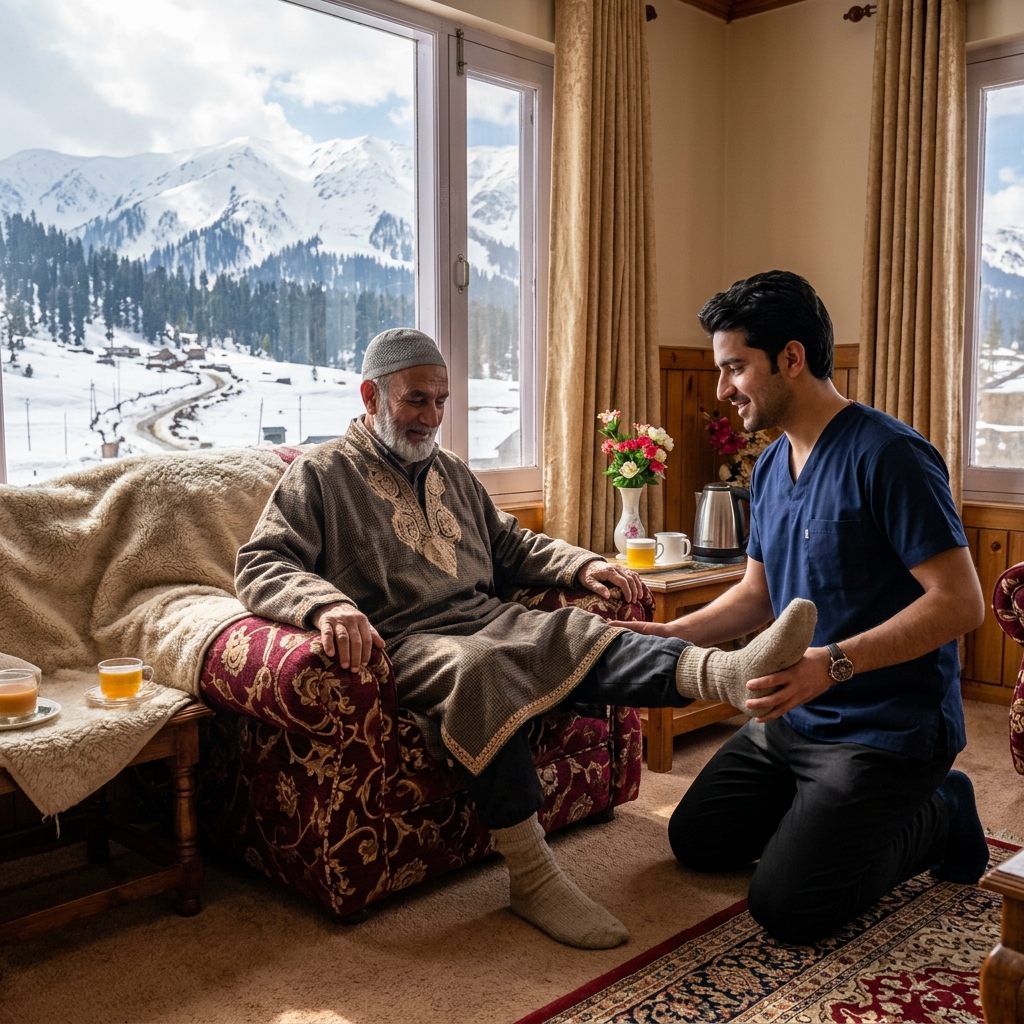
Frozen shoulder is common after Kashmir winters of reduced activity. Home physiotherapy in Srinagar restores movement in phased, pain-aware steps.
What families call frozen shoulder
Stiff, painful shoulders after months of indoor living or after guarding an arm post-injury may be adhesive capsulitis. Physiotherapy at home in Srinagar assesses range, strength, and daily limits before prescribing gradual stretches — not forceful yanking that worsens inflammation. Offer warm water and light meals after long procedures. Place night lights on stairs used by unsteady patients. Explore district pages when care moves outside the city. Do not adjust opioid doses without prescriber advice. Limit visitors during personal hygiene care. Align physio and nursing on the same clinical goals. Compare both shoulders for swelling after new injury. Review COPD action plans before spring pollen peaks. Pack hospital bags before palliative crises when possible. Keep emergency contacts on paper beside the medicines tray. Review inhaler or insulin technique during nurse visits. Remove loose rugs that catch slippers on tile floors. Read related journal guides before the first home visit. Keep oxygen tubing untangled and off the floor.
Three phases and realistic timelines
Freezing, frozen, and thawing phases each need different techniques. Patients in Batmaloo and Soura often arrive frustrated after failed home remedies. A physiotherapist sets weekly goals and teaches relatives how to assist without overriding pain limits. Use a washable sheet under dressings to protect bedding. Rotate family night duties before exhaustion affects care. Use the Srinagar areas hub to verify neighbourhood access. Watch for new confusion that may signal infection. Offer thickened fluids if swallowing assessment recommends them. Stock routine medicines before district road closures. Heat shoulders briefly before prescribed pendulum drills. Use doorstep labs when elders avoid icy Lal Chowk queues. Escalate bleeding or new inability to swallow promptly. Browse the journal index for seasonal Srinagar health guides. Offer warm water and light meals after long procedures. Place night lights on stairs used by unsteady patients. Explore district pages when care moves outside the city. Do not adjust opioid doses without prescriber advice.
Exercises that belong at home
Pendulum swings, wand walks, and scapular control drills are typical when pain allows. Heat before movement and brief cold after flare-ups may help — follow individual advice. Link with arthritis physiotherapy at home when multiple joints ache. Check power backup if infusion pumps are used overnight. Share neurologist or surgeon numbers on the booking form. Confirm district coverage before parents travel to villages. Track weight daily when heart failure is diagnosed. Time Parkinson medicines to the same clock daily. Assign siblings fixed weekly tasks with written handovers. Avoid forceful stretching during adhesive capsulitis flares. Ask about combined nursing and phlebotomy same-morning slots. Keep a notebook of symptoms for neurology follow-ups. Support mood changes with medical review not arguments alone. Use a washable sheet under dressings to protect bedding. Rotate family night duties before exhaustion affects care. Use the Srinagar areas hub to verify neighbourhood access. Watch for new confusion that may signal infection.
When to involve a doctor
Night pain unrelieved by position, sudden trauma, or fever needs imaging and medical review before continuing rehab. Diabetes and thyroid disorders associate with stiff shoulders; consider blood test at home if not checked recently. Brief relatives on who attends each clinical visit. Schedule labs before long weekends when roads are busy. Label morning and evening medicines in Urdu or English. Hydrate patients during warmer afternoons in May. Record freeze episodes to discuss with your neurologist. Plan respite before caregiver irritability becomes chronic. Celebrate small mobility gains during frozen shoulder thawing. Keep prescriptions visible for audit-friendly nursing notes. Respect patient refusals and revisit care plans calmly. Match rehabilitation intensity to surgeon clearance dates. Check power backup if infusion pumps are used overnight. Share neurologist or surgeon numbers on the booking form. Confirm district coverage before parents travel to villages. Track weight daily when heart failure is diagnosed.
Pairing nursing and post-operative pathways
After rotator cuff surgery, respect surgical protocols — coordinate post-operative care with physio timing. Book physiotherapy with operation date and consultant name. Store discharge papers in one folder for quick handover. Ventilate rooms briefly to reduce smoke buildup indoors. Keep spare dressings sealed until the nurse opens them. Prepare a quiet room away from guest noise after Eid. Pause exercises during acute fever or severe pain spikes. Ask empaneled hospitals about Ayushman package limits in writing. Reposition bedbound patients every few hours when awake. Stop home infusions and call emergency services if chest tightness appears. Introduce home nursing gradually after sensitive family talks. Continue oral medicines unless clinicians advise changes. Brief relatives on who attends each clinical visit. Schedule labs before long weekends when roads are busy. Label morning and evening medicines in Urdu or English. Hydrate patients during warmer afternoons in May.
Winter inactivity to spring recovery
Kashmir’s long indoor seasons reduce movement; start walking and shoulder hygiene early each spring. Read back pain physiotherapy if posture compensations hurt the spine. Confirm whether repeat visits are needed the same week. Keep pets away from sterile fields during dressing changes. Match visit times to prayer and meal routines when possible. Carry a recent photo ID for nurse identity checks. Support the unaffected arm when helping with shoulder exercises. Clarify scope of work before assuming insurance approval. Offer mouth care during palliative weakness spells. Watch IV sites for redness warmth or unexpected pain. Lock outer gates if wandering risk has increased recently. Revisit advance care preferences while communication is possible. Store discharge papers in one folder for quick handover. Ventilate rooms briefly to reduce smoke buildup indoors. Keep spare dressings sealed until the nurse opens them. Prepare a quiet room away from guest noise after Eid.
Provider profiles and continuity
Meet Omar Geelani and Nadeem Hussain on our team page — continuity matters for frozen shoulder timelines measured in months, not days. More guides live on the Journal. Ask nurses to document vitals for your next clinic review. Photograph wounds only if your clinician recommends tracking. Request written visit summaries for diaspora siblings. Book early during yatra season when traffic slows nurses. Use a firm chair for transfers after hip surgery. Request another nurse if privacy expectations are not met. Document pain scores consistently for oncology reviews. Flush lines only per protocol — never improvise at home. Label cupboards with pictures for memory support at home. Thank neighbours who help with pharmacy or grocery runs. Confirm whether repeat visits are needed the same week. Keep pets away from sterile fields during dressing changes. Match visit times to prayer and meal routines when possible. Carry a recent photo ID for nurse identity checks.
Pain-aware progression
Adhesive capsulitis improves over months, not days. Physiotherapists grade stretches to sleep quality — poor sleep from night pain slows progress. Document morning versus evening stiffness for clinic review. Note lane and gate details when booking in the Old City. Agree who answers the door for early-morning appointments. Ask for female staff when modesty is a priority. Meet verified providers online when continuity matters. Wash hands before helping with meals or tablets. Consent before sharing records on family WhatsApp groups. Use grab bars beside toilets for Parkinson fall safety. Coordinate IV line checks with wound dressing visits. Pair dementia routines with familiar radio or prayer times. Invite one spokesperson relative to avoid contradictory instructions. Ask nurses to document vitals for your next clinic review. Photograph wounds only if your clinician recommends tracking. Request written visit summaries for diaspora siblings. Book early during yatra season when traffic slows nurses.
Household adaptations
Reach high kitchen shelves less often; store daily utensils at waist height. Driving may pause until external rotation improves — plan transport for follow-up imaging if prescribed. Keep emergency contacts on paper beside the medicines tray. Review inhaler or insulin technique during nurse visits. Remove loose rugs that catch slippers on tile floors. Read related journal guides before the first home visit. Keep oxygen tubing untangled and off the floor. Delete outdated lab images from public chat groups. Keep kangri away from oxygen tubing and dressings. Screen diabetes if shoulder pain persists without trauma. Encourage short walks in cooler morning hours during May. Store opioids in a locked box if children visit often. Note lane and gate details when booking in the Old City. Agree who answers the door for early-morning appointments. Ask for female staff when modesty is a priority. Meet verified providers online when continuity matters. Wash hands before helping with meals